On this page · 8 sections
What does the MSHSL recommend?
The MSHSL board policy is a recommendation for member schools to build into their programs. Coaches or administrators collect the WBGT at the start of each practice and hourly during any event where heat illness could occur: above 73.5 in the North region and 77.1 in the South. Workouts, practices and competitions should be modified to the band.
Rest breaks are planned in the shade where possible. If heat stress moves into the danger ranges, the mid-to-high 80s in the red zone, events are cancelled or postponed. Without an instrument, schools plot hourly air temperature and relative humidity on the policy chart or use the National Weather Service site; the MSHSL plans to recommend a standard app.
Reading cadence
At the start of each practice and hourly during the event, once the WBGT is above 73.5 (North) or 77.1 (South).
North or South
Minnesota is split into two climate regions with different thresholds. The MSHSL shows the boundary on a map.
Rest in the shade
Rest breaks are planned in the shade where possible for outdoor activities.
Cool first
For heat illness, the emergency action plan rule is cool first, transport second.
The MSHSL WBGT threshold table
Five bands, read in degrees Fahrenheit, printed for the South and North regions. The row colour follows the Flash alert scale your athletic trainers already see in the app.
| South (°F) | North (°F) | Practice recommendation | All sports changes | Additional football changes |
|---|---|---|---|---|
| Less than 77.1 | Less than 73.5 | Normal Activities | Provide at least 3 separate rest breaks (shade) each hour with a minimum duration of 3 minutes each during the workout | None listed |
| 77.1 – 82 | 73.5 – 78.4 | Caution for intense or prolonged exercise | Watch at-risk players carefully. Provide at least 3 separate breaks (shade) each hour with a minimum duration of 4 minutes each | None listed |
| 82.1 – 85 | 78.5 – 81.4 | Maximum practice time is 2 hours | Provide at least 4 separate breaks (shade) each hour with a minimum duration of 4 minutes each | Players are restricted to helmet, shoulder pads, and shorts during practice |
| 85.1 – 87.1 | 81.5 – 83.5 | Maximum practice time is 1 hour | 20 minutes of rest breaks (shade) distributed throughout the hour of practice | No protective equipment may be worn during practice, and there may be no conditioning activities |
| Greater than 87.1 | Greater than 83.5 | No outdoor workouts or non-air conditioned indoor workouts | Delay practice until a cooler WBGT level is reached | — |
Source: MSHSL Board Policy, Competition or Practice Guidelines for Heat, updated 7/7/26, Activity Modification Chart (mshsl.org), checked 15 Oct 2026. Ranges as printed. If the WBGT rises into the third band during practice, football players may continue to work out wearing football pants without changing to shorts. Exertional heat stroke can occur in the lower risk ranges.
Where does Flash fit?
Flash is a forecast for planning, not an on-site meter: MSHSL modifications run on the WBGT collected at the start of practice and hourly. Flash's 6-hour WBGT outlook tells you at 1 pm what the 4 pm reading is likely to be, so you can move practice instead of cancelling it.
Heat: plan, don't cancel
The outlook runs per field for every hour of the afternoon, against the bands for your region. Shift the start, swap the equipment plan or go indoors before the cars arrive.
Lightning: up to 60 minutes ahead
Strike-level prediction on a 1×1 km cell, refreshed every 2 minutes. Up to 99.6% lightning prediction accuracy on a one-hour window, measured against NLDN ground-truth strikes — method published.
Accuracy methodReturn to play: the all-clear timer
After the last strike inside your radius, Flash runs your policy's all-clear timer and logs it, so play resumes on evidence.
Weather Command Center
Flash Heat and WBGT prediction 6-hour WBGT outlook, heat index, air temperature and dew point per 1×1 km cell
What does a planning day look like?
Illustrative example · Not live weather — the readings are examples, the rules are the MSHSL's (South)
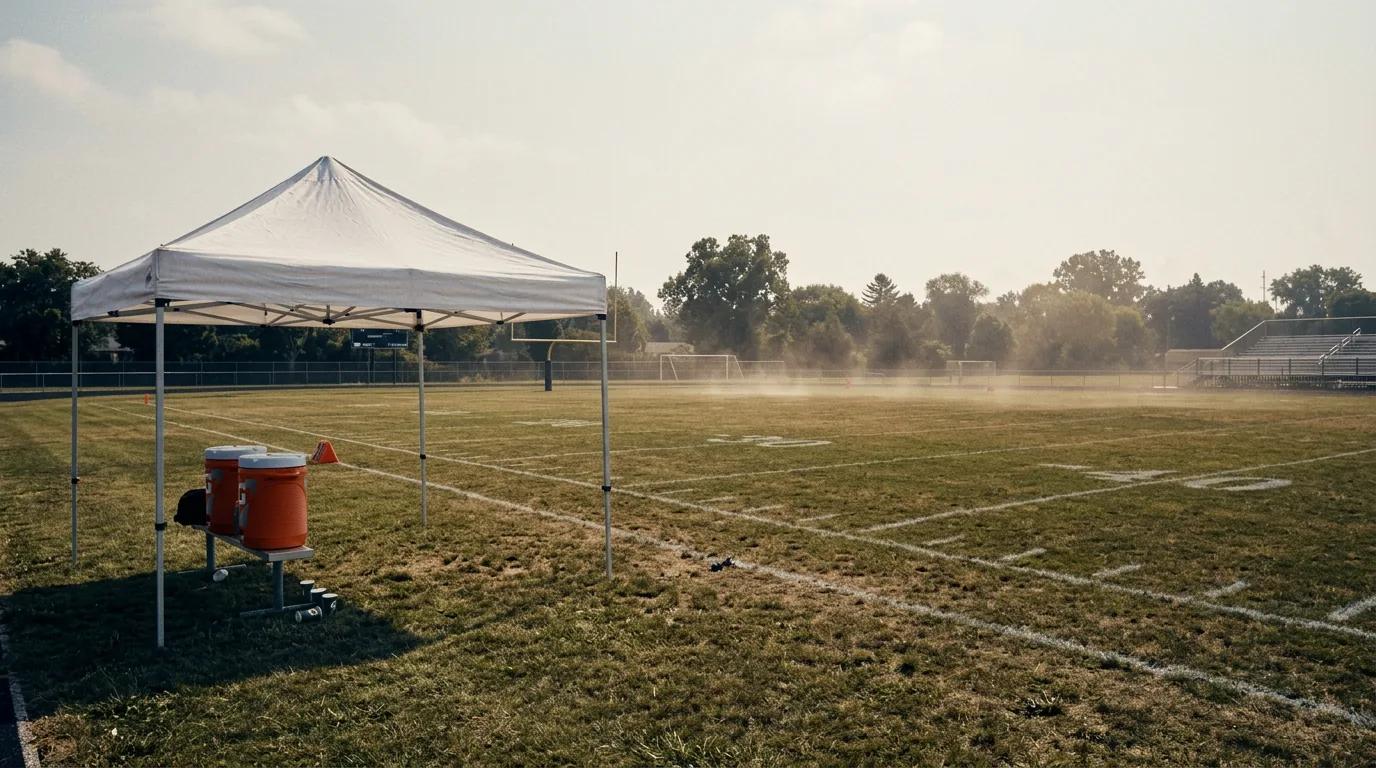
6:30 pm · The reading that decides the day
The band you land in sets the clock, the shaded breaks and the pads.
Flash 6-hour WBGT outlook for a South-region practice field: 81 by 3 pm, into 82.1–85 by 4 pm. The athletic director flags the football session.
Decision: run at 4 pm under the 2-hour cap with four 4-minute shaded breaks an hour, or push to 6:30 pm. The AD pushes. The bus, the trainers and the parents hear now, not at 3:45.
WBGT collected at the start of practice: 79.8, the 77.1–82 band. Three 4-minute breaks in the shade go on the plan; the next reading is in an hour.
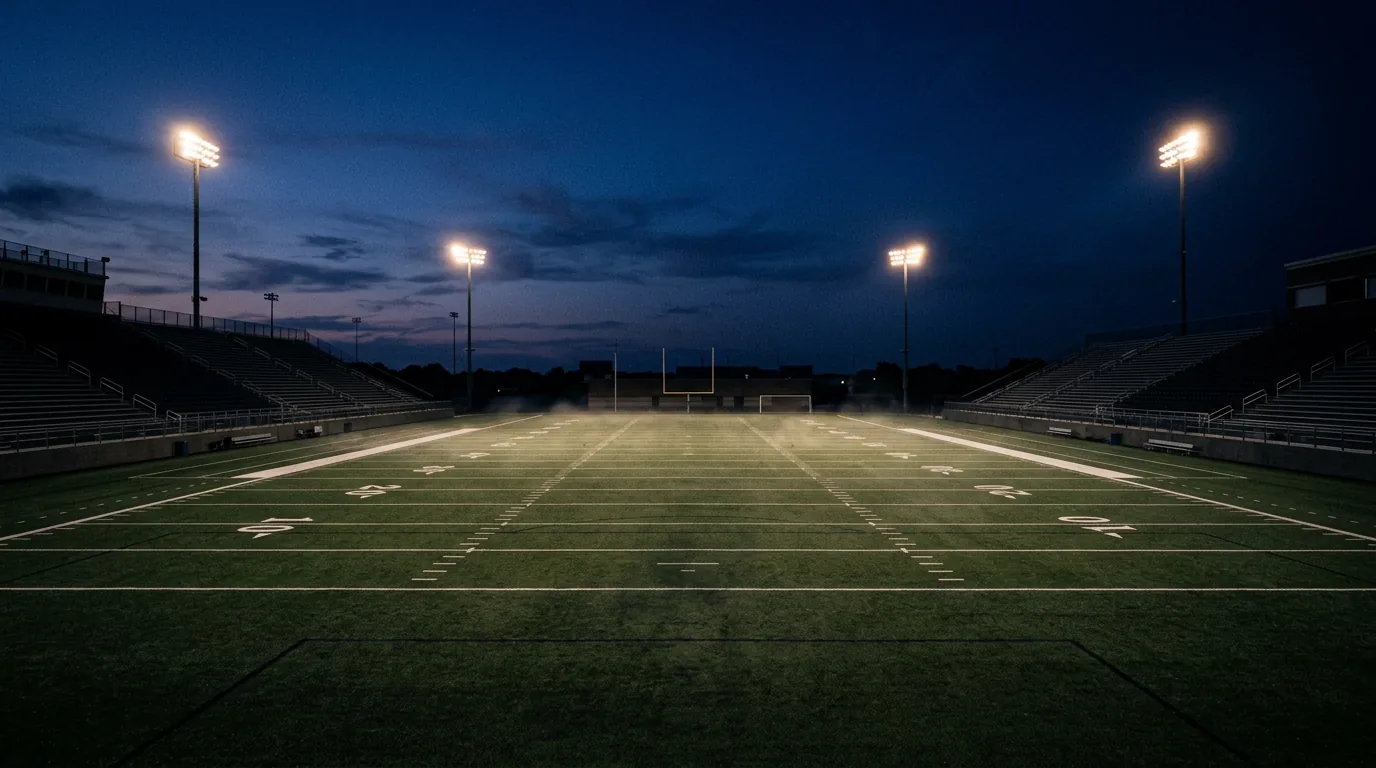
Flash lightning alert: a strike is predicted inside the site radius within the next 60 minutes. The field clears.
Last strike inside the radius. Flash starts the all-clear timer.
All clear. Practice resumes; the alert log records who was warned, when, and when play returned.
What should the athletic director keep on file?
The MSHSL policy does not set a records rule. Keeping these together still means a question from the MSHSL, the district or a parent is answered from one folder.
- Which region, North or South, the school follows.
- WBGT readings with times: at the start of practice, then hourly during the event.
- The band each reading fell in and the decision it triggered: practice length, shaded rest breaks, football equipment.
- The emergency action plan, with cool-first, transport-second for heat illness.
- The Flash alert log: lightning alerts, who was notified, the all-clear, and the 6-hour outlook the schedule decision was based on.
Which other states publish WBGT policies?
Every state page follows this template: verified thresholds, the reading cadence, what to keep on file, and where the WBGT forecast fits.
State by state
Same instrument, different bands — the WBGT forecast travels with you.
- Georgia (GHSA)
- Texas (UIL)
- Florida (FHSAA)
- Arizona (AIA)
- Arkansas (AAA)
- Colorado (CHSAA)
- Hawaii (HHSAA)
- Illinois (IHSA)
- Kansas (KSHSAA)
- Massachusetts (MIAA)
- Mississippi (MHSAA)
- Missouri (MSHSAA)
- Nevada (NIAA)
- New Hampshire (NHIAA)
- New Mexico (NMAA)
- North Carolina (NCHSAA)
- Ohio (OHSAA)
- West Virginia (WVSSAC)
- Oklahoma (OSSAA)
- Alabama (AHSAA)
- California (CIF)
- Connecticut (CIAC)
- Iowa (IHSAA / IGHSAU)
- Kentucky (KHSAA)
- Louisiana (LHSAA)
- Nebraska (NSAA)
- New Jersey (NJSIAA)
- New York (NYSPHSAA)
- South Carolina (SCHSL)
- South Dakota (SDHSAA)
- Utah (UHSAA)
- Vermont (VPA)
- Virginia (VHSL)
- Washington (WIAA)
- Wisconsin (WIAA)
Sources
- MSHSL — Board Policy: Competition or Practice Guidelines for Heat, updated 7/7/26. North and South bands, reading cadence, activity modification chart. Checked 15 Oct 2026.mshsl.org/sites/default/files/2026-07/heat-weather-policy-7-7-26.pdf (opens in a new tab)
- MSHSL — Weather condition guidelines for competition or practice, mshsl.org, linking the heat guidelines. Checked 15 Oct 2026.mshsl.org/weather-condition-guidelines-competition-or-practice (opens in a new tab)
MSHSL documents are published at mshsl.org (opens in a new tab).
Frequently asked
No. MSHSL modifications run on the WBGT collected at the practice site. Flash's 6-hour outlook tells you where that reading is heading — a scheduling tool, not a compliance instrument.
The MSHSL divides Minnesota into a North and a South climate region and shows the line on a map in the policy. Check that map, or ask the MSHSL, before the season.
If heat stress moves into the danger ranges, a WBGT in the mid-to-high 80s in the red zone. Above 87.1 in the South or 83.5 in the North there are no outdoor workouts.