
Skip to content

SCHOOLS · BIG 12 OFFICIAL WEATHER SAFETY PROVIDER

Lightning prediction and WBGT planning for athletic directors — built to work beside your on-site sensor, not replace it.

Flash gives you up to 60 minutes of lightning lead time and a WBGT forecast, so you can move practice before the policy forces you to. Your on-site WBGT device still makes the call at the moment.

Official weather safety provider of the Big 12 Conference · no sensors required for the forecast

An empty floodlit high-school athletic field at dusk under building cumulus clouds, with Flash’s practice-field WBGT card showing 88.1 °F and the day’s lightning advisory and all-clear

TODAY · PRACTICE FIELD B

Thu 24 Sep

88.1 °F

WBGT forecast for 3:00 pm · GHSA bands 82 · 87 · 90

  • 1:00 pmWBGT forecast 88.1 — practice moved to 5:30 pm
  • 3:40 pmLightning Advisory — strike predicted within 60 min
  • 4:28 pmAll-clear — return-to-play timer done

ILLUSTRATIVE EXAMPLE · NOT LIVE WEATHER

Skye · ask in plain language

Ask the question your crew actually asks.

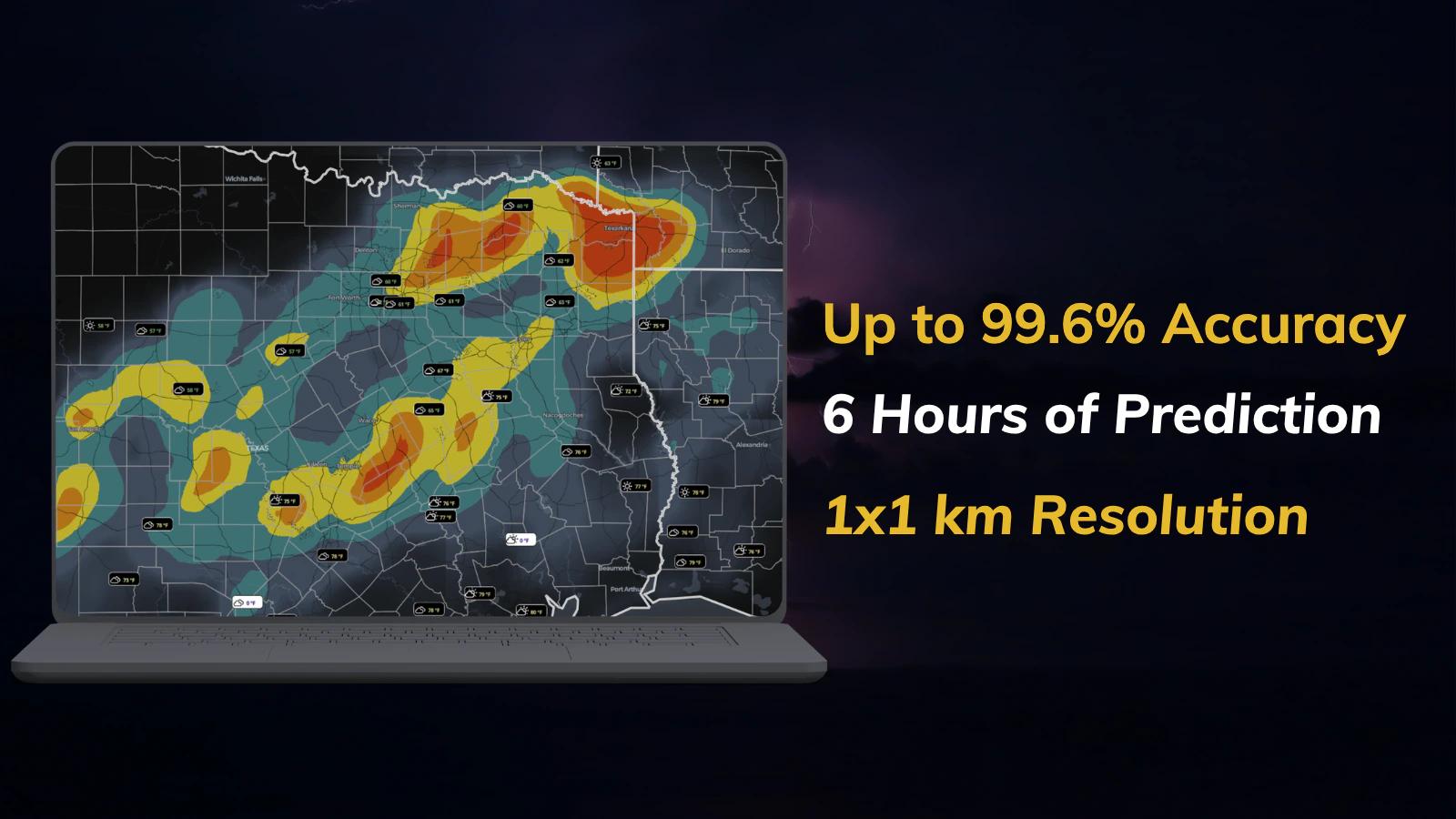
Pick your industry. Skye, Flash Weather's AI weather agent, answers from the same 1×1 km forecast, refreshed as often as every two minutes, then acts in the tools you already run.

SKYE can connect to your CRM and ERP.

Your tools and data

Sites, limits, schedules

CRM · ERP · Procore · Slack

Prediction engine

15+ forecasts, 1×1 km

Lightning every 2 min, hail every 5

Power
Skye, the Flash Weather agent

Skye

Combines both, answers in plain language, proposes the action.

You and your crew

Ask in plain language

Get the answer in seconds

Your decision

  • Go / No-go
  • Reschedule
  • Alert the crew
Pick your industry

Questions crews ask

Illustrative example · not live weather

Heat monitoring for schools: what your sensor measures and what Flash forecasts

Each state association sets how the WBGT reading is taken. Georgia (GHSA) and Florida (FHSAA) require a reading from a WBGT device at the practice site; Texas (UIL) accepts a scientifically approved instrument or another scientifically proven method. Flash does not replace that reading; it tells you what the reading is likely to be before you have to take it.

THE QUESTIONON-SITE WBGT SENSORFLASH
WBGT right now, on this fieldYESThe sensor reading is the number of recordNOFlash reads your sensor through the integration and writes it to the log
WBGT this afternoon, when practice startsNOA sensor measures the presentYESWBGT forecast for each field, updated through the day
Lightning up to 60 minutes aheadNODetection hardware reports strikes that already happenedYESFirstStrike, 1×1 km cells, refreshed every 2 minutes, up to 60 minutes ahead
Return-to-play timerNOCounted by hand on the sidelineYESReturn-to-play countdown from the last strike on your policy’s interval, restarted automatically on each new one
Alert log for the athletic directorNOPaper log, if anyone remembersYESEvery outlook, alert, acknowledgement and all-clear, timestamped

Policy compliance uses the reading your state requires.Planning uses Flash.

How Flash forecasts heat and WBGT →

A practice day with Flash, hour by hour

The athletic trainer sets the WBGT thresholds from your state policy once. From then on the outlook, the advisory, the warning and the all-clear reach the phones of the people you name, and the log writes itself.

ILLUSTRATIVE EXAMPLE · NOT LIVE WEATHER

FIELD B

Time
4:35 pm
Field status
Practice on
WBGT
—
Lightning
Clear

Log written

Heat shimmer rising off an empty synthetic turf practice field in hard afternoon sun with a thunderhead climbing behind the bleachers

2:00 PM · WBGT CLIMBING

Heat first, lightning second, same afternoon

  1. 6:00 am

    Morning outlook lands

    The WBGT forecast for each field and the day’s lightning risk go to the AD and the athletic trainer before first period.

  2. 1:00 pm

    WBGT forecast pushes practice to 5:30 pm

    The outlook for 3:00 pm on Field B is 88.1 °F, inside the GHSA 87.0–89.9 band. The trainer moves varsity to 5:30 pm and the coaches get the change by SMS.

  3. 3:40 pm

    Lightning Advisory

    FirstStrike forecasts a strike within 60 minutes in the 1×1 km cells around campus. Coaches are told to keep the buses close and the gym unlocked.

  4. 3:58 pm

    Lightning Warning, field cleared

    JV practice clears to the gym, the horn integration sounds two blasts, facilities close the pool deck. Every acknowledgement is stamped.

  5. 4:28 pm

    All-clear countdown ends

    Once your policy’s return-to-play interval has passed since the last predicted or detected strike, Flash issues the all-clear. The trainer’s on-site sensor confirms WBGT at 84.6 °F before anyone goes back out.

  6. 4:35 pm

    Practice resumes, log written

    Every outlook, alert, acknowledgement and sensor reading is in the alert log for the AD.

Your state’s WBGT thresholds, and how to plan for them

Every state association publishes its own activity bands. Flash loads the bands for your state, so the WBGT forecast is expressed in your policy’s terms rather than raw degrees.

GEORGIA · GHSA

Georgia High School Association heat policy, as Flash applies it

WBGT bands in °F and the activity modification at each
WBGT (°F)Modification
under 82.0Normal activities; at least three rest breaks per hour
82.0 – 86.9Use discretion for intense practice; watch at-risk athletes
87.0 – 89.9Maximum 2 hours of practice; four rest breaks per hour
90.0 – 92.0Maximum 1 hour; no protective equipment; 20 minutes of rest
over 92.0No outdoor workouts; delay until a cooler WBGT is measured

Flash’s outlook tells the trainer at 1:00 pm which band the 3:00 pm reading will fall in. The on-site sensor still confirms it before practice.

Read the Georgia heat policy page →

MORE STATE POLICY PAGES

  • Florida

    FHSAA · WBGT monitoring policy and cooling zones

  • Texas

    UIL · heat acclimatization and WBGT guidance

  • Oklahoma

    OSSAA · WBGT instrument or another scientifically proven method

Each page lists the association’s bands, the modifications at each band and how Flash’s outlook and alerts map to them.

Who gets the alert, and on which channel

Roles are set per campus. Each person gets only the alerts for the fields they are responsible for, and each alert asks for a one-tap acknowledgement that goes into the log.

ILLUSTRATIVE EXAMPLE · NOT LIVE WEATHER

  • The Flash Weather Command Center on a laptop, the screen an athletic director uses to see every field, alert and acknowledgement on one page

    COMMAND CENTER

    Athletic director

    Athletic director · Web appLightning Warning, Field B, 3:58 pm. Acknowledgements are going into the log.

    Every alert for every field, the daily outlook and the alert log. Weekly summary of alerts and acknowledgements by email.

    • WEB APP
    • EMAIL
    • SMS
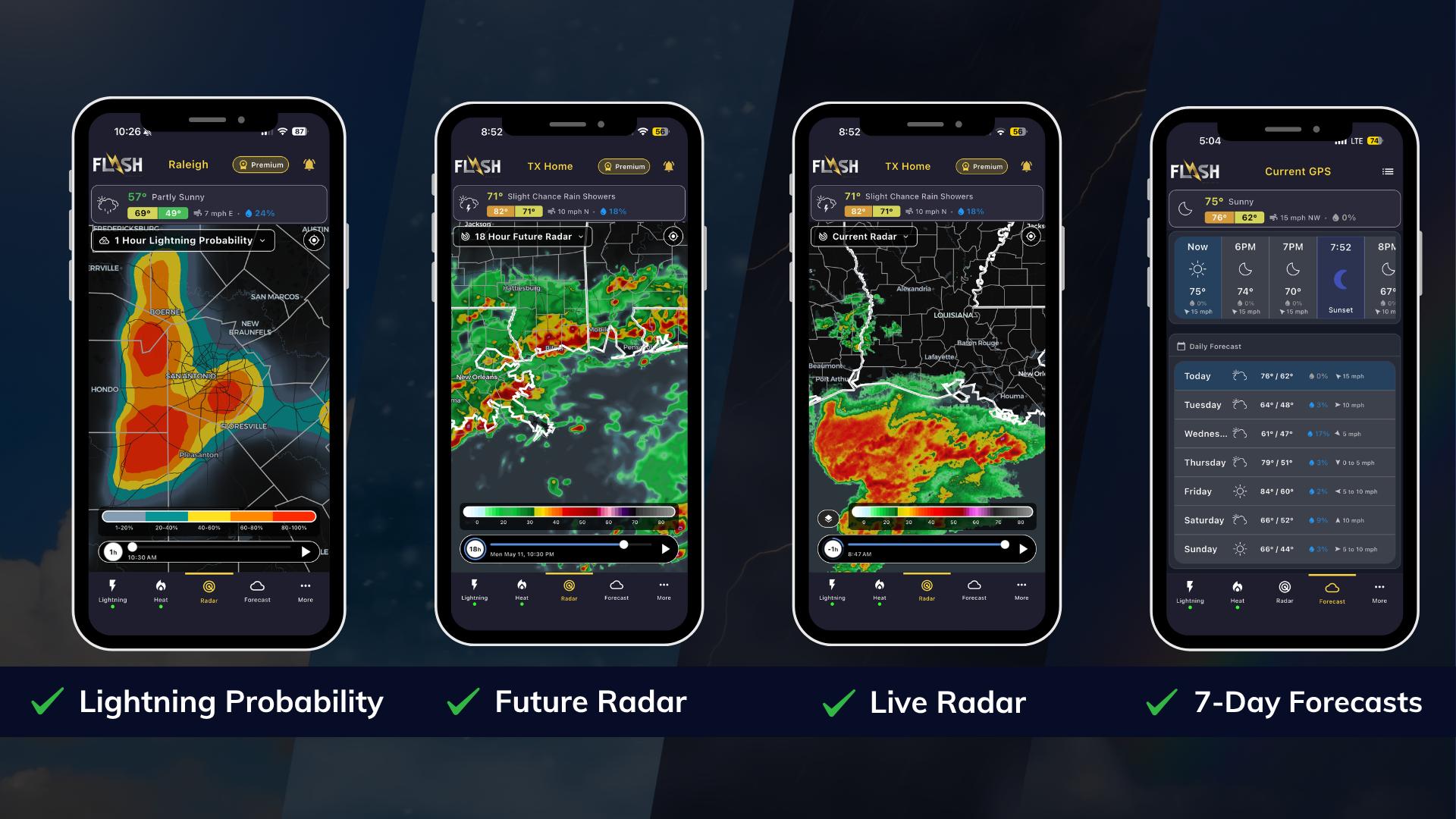
  • The Flash mobile app in an athletic trainer’s hand showing the WBGT forecast in policy bands with the return-to-play timer

    MOBILE APP

    Athletic trainer

    Athletic trainer · Mobile appAll-clear, Field B, 4:28 pm. Timer done. Confirm the sensor reading.

    WBGT forecast in policy bands, Advisory, Warning, all-clear and the return-to-play timer. Sets the thresholds and confirms the sensor reading.

    • MOBILE APP
    • SMS
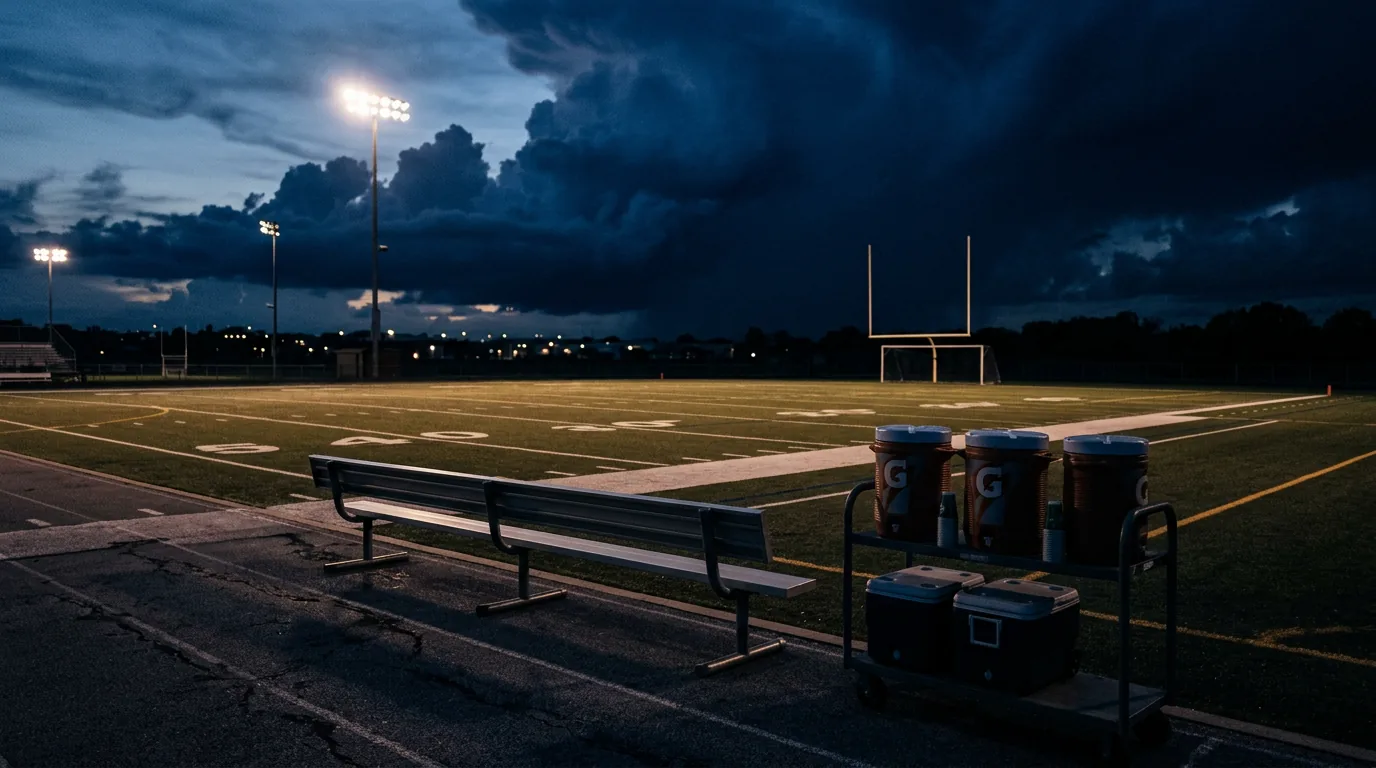
  • An empty sideline bench and water coolers beside a floodlit practice field at dusk, storm clouds building beyond the goalposts

    SIDELINE

    Coaches

    Coaches · SMSLightning Warning. Clear Field B now. All-clear est. 4:28 pm.

    Practice moves, Warning and all-clear for their own field only. One-tap acknowledgement from the sideline.

    • SMS
    • MOBILE PUSH
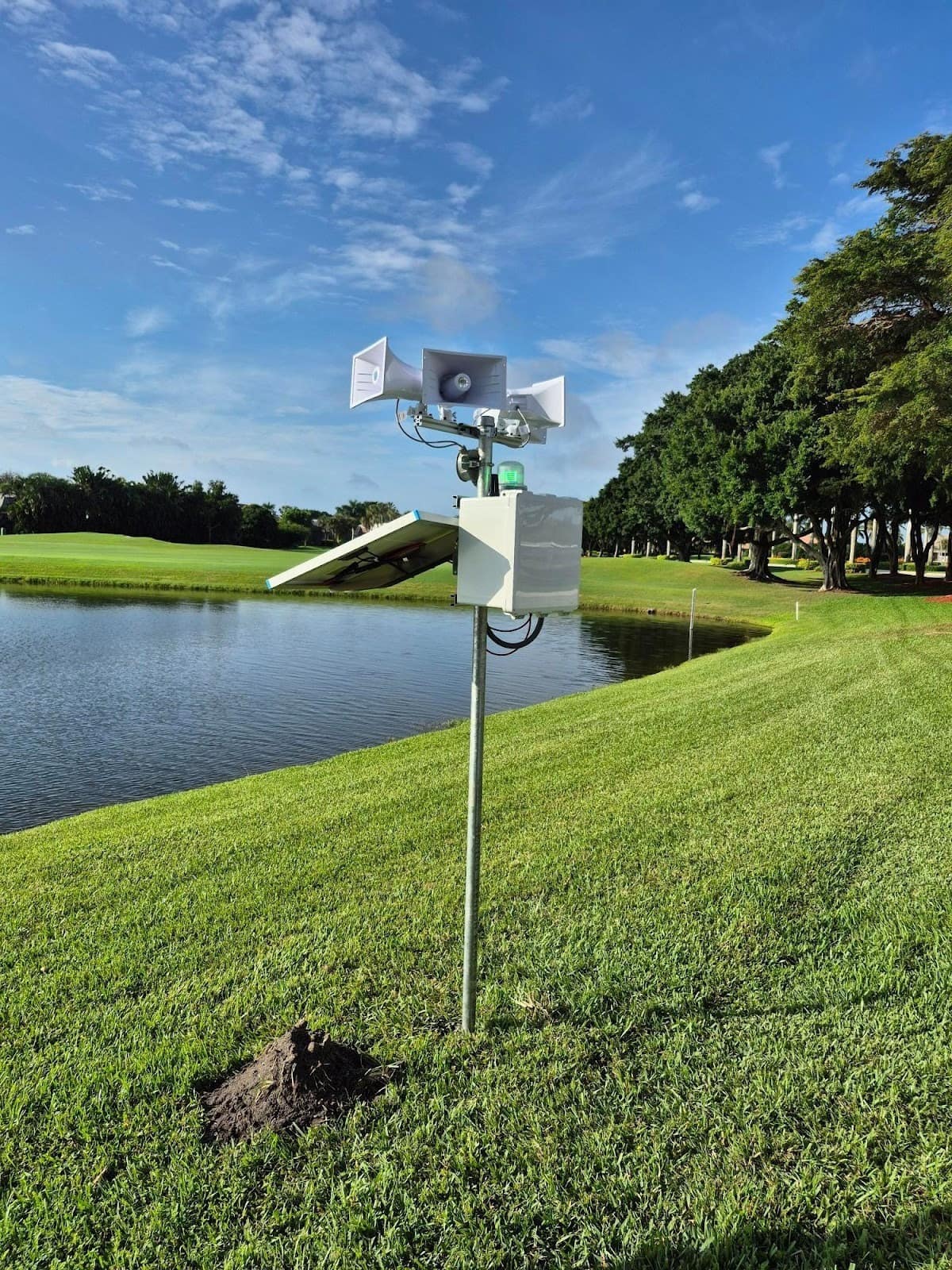
  • Flash Weather Shield siren installed on a golf course

    HORN AND GATES

    Facilities

    Facilities · HornHorn sounded · strobes on · Field B

    Warning and all-clear for the pool deck, stadium and gates; horn integration status and a test button.

    • SMS
    • HORN
  • An empty baseball infield with the rain tarp rolled at the edge and the floodlights burning under heavy evening storm cloud

    GAME DAY

    Officials

    Officials · RadioLightning Warning at the stadium. Suspend play. All-clear est. 4:28 pm.

    Game-day Advisory, Warning and all-clear through the host school’s channel.

    • SMS
    • RADIO

Flash, the Big 12 Conference and the NAIA

Two names an athletic director will recognise, stated as they stand.

  • An empty collegiate championship stadium bowl at dusk, bleachers and scoreboard gantry in silhouette beneath a thick bank of storm cloud

    NAIA · OFFICIAL PARTNER

    Official Weather Monitoring & Alert System of the NAIA

    Official Weather Monitoring & Alert System of the NAIA

    • Official partner · through October 2028

    The NAIA named Flash its Official Weather Monitoring & Alert System through October 2028, covering the association’s opening rounds and national championships.

  • A large empty college football stadium seen from the upper deck at twilight, floodlights burning and a distant lightning flash on the horizon

    BIG 12 CONFERENCE · OFFICIAL WEATHER SAFETY PROVIDER

    Official weather safety provider of the Big 12 Conference

    Official weather safety provider of the Big 12 Conference

    • Official weather safety provider
    • Big 12 Conference

    Flash is the official weather safety provider of the Big 12 Conference.

Official partner

Official Weather Monitoring & Alert System of the NAIA

Flash covers the NAIA’s opening rounds and national championships through October 2028: lightning predicted up to 60 minutes ahead for each venue’s 1×1 km cell, WBGT planning for every practice and game, and a written log for every call. The Big 12 Conference runs Flash as its official weather safety provider.

Partner page on naia.org (opens in a new tab) (opens in a new tab)All partners

NAIAOfficial alert systemThrough October 2028 · opening rounds and national championships

Flash does not replace an on-site WBGT device. The full partner list is on the press and partners page. Press & partners

In the field

What athletic and activities directors say

The people making the call are outside, with a sky like this over them.

  • An empty floodlit high-school athletic field at dusk under building cumulus clouds, with Flash’s practice-field WBGT card showing 88.1 °F and the day’s lightning advisory and all-clear

    “Flash Weather has been a tremendous resource for helping us plan and make informed decisions around weather conditions, especially lightning and heat. Being able to see when lightning is predicted in our area allows us to plan ahead and keep our athletes, coaches, and staff safe. The five-day Wet Bulb Globe Temperature (WBGT) forecast has also been extremely valuable for our fall sports, giving our coaches the information they need to prepare for heat conditions well in advance. Flash Weather has become an important tool in helping us stay proactive rather than reactive when it comes to weather.”

    SchoolsJeff BissenActivities Director · Glenwood Community High School, Glenwood, Iowa
  • Flash Weather quote card: Nic Troupe, Athletic Director, Pinnacle Charter School, over a photo of the school’s stadium

    “I was skeptical at first, but this has been awesome to have in my bag since last spring. I was able to get kids out on the field sooner because of a weather delay and keep officials and teams updated throughout; it made me look like a weather magician. I have even had school district admin calling me this fall when they were concerned about a potential weather situation that could impact school dismissal to see what the next 30 minutes were going to look like. I would recommend this to any AD as an additional tool to have in your bag.”

    SchoolsNic TroupeAthletic Director · Pinnacle Charter School
  • An empty sideline bench on a floodlit practice field under an evening storm sky

    “It has made it easier to communicate with coaches on weather delays. They have access to see and plan ahead with the lightning predictors that makes it more efficient so we make the most of our time.”

    SchoolsAndrew VireGravette School District

Who brings Flash into schools, and why

The titles that make the call, the problem they describe on the first conversation, and where they gather.

Who buys

  • Athletic or Activities Director
  • Athletic Trainer
  • Campus Emergency Manager
  • Superintendent
  • Director of Safety & Security
  • District Athletic Director
  • Principal

The problem on the first call

  • Lightning delays and the 30-minute rule.
  • Heat safety for fall sports: WBGT forecasts so coaches can plan ahead.

Customers we can name

Where these buyers gather

  • NIAAA, the National Interscholastic Athletic Administrators Association, and its state-level conferences
  • NADC

Questions athletic and activities directors ask before a demo

Short answers here; the full FAQ covers procurement, data and integrations.

Read the full FAQ →

No. Your state policy sets how the reading is taken, and Flash does not take it. Flash reads your device through the integration, logs the reading, and forecasts what it will read later in the day so you can move practice early instead of cancelling it late.

Five days out, hour by hour, modeled on your own fields rather than the nearest airport. A handheld tells you this minute; Flash shows the band you will be in at 4 PM, at 5 PM and on Thursday, so water breaks and start times are planned before anyone dresses out.

The timer starts at the last predicted or detected strike inside your radius and counts down the interval your policy sets. A new strike restarts it. At zero, Flash issues the all-clear to everyone on the field’s list and writes it to the log with the time and the model run.

Yes. Each field is its own 1×1 km cell with its own alert list. The athletic director sees every campus in the Weather Command Center; a coach only gets the field they are standing on.

Pricing is per person, per month, by product, so a school pays for the athletic trainers and coaches who use it; a district adds people the same way. The prices are on the pricing page. A demo loads your fields and shows the alert log you would have had for last season.

Every outlook, alert, acknowledgement and all-clear is timestamped in the alert log, by day and by field.

The product, the policy, the comparison, the pricing and one customer story, then three related industries.

Live demo · No sensors required for the forecast

See your own sites on the map before the next storm.

We'll load your locations, replay last season's strikes against Flash's predictions, and show you the alert log your safety officer would have received.