In this article · 8 sections
If you are pricing lightning safety for a school district, a park system or a golf club, Perry Weather is probably on your shortlist. It is a well-built detection and on-site alerting system. Flash is built around a different question: not "did lightning just strike inside my radius?" but "is lightning likely in this square kilometre in the next hour?" This comparison sets out what each vendor publishes, as of 15 October 2026, so you can decide which fits your policy, or whether you want both.
The short answer
Perry Weather alerts on confirmed strikes. Its own site says it uses the National Lightning Detection Network (NLDN), detects lightning and alerts your team in under 20 seconds, and pairs the software with on-site sirens, strobes and a weather station that reads WBGT. Flash forecasts, for every 1×1 km cell, the likelihood of a cloud-to-ground strike in the next 60 minutes, refreshed every 2 minutes, with no hardware required. Choose Perry Weather if your priority is a strike-confirmed alert and an on-site heat reading from one vendor. Choose Flash if you need to make the call before the first strike. Many sites run detection and prediction together.
What Perry Weather does well
Everything in this section is as published on perryweather.com, checked 15 Oct 2026.
- Strike-confirmed alerts. Perry Weather triggers on lightning located by the NLDN, the same network Flash uses as ground truth when it scores its own forecasts.
- Zones and timers that match your policy. You set the alert radius per location, create multiple detection zones, and a countdown timer restarts with each new strike before an all-clear goes out.
- A complete on-site package. Perry Weather sells sirens with text-to-speech PA messages, strobes that run for the length of a delay, and a weather station with sensors for WBGT, heat index, wind and rain, plus an HD snapshot camera. Units use built-in cellular, with solar options.
- Delay records. It stores a timestamped history of every lightning delay and can email reports on a schedule, which helps with claims and compliance.
- People on call. Meteorologist support runs 8am to 5pm on the Core tier and 24/7 on Plus and Advanced.
Perry Weather names Round Rock ISD, which it says covers 47,000 students, among its customer stories. If your heat policy requires a WBGT reading taken on your own site, an on-site station like Perry Weather’s is a direct way to meet it.
How Flash approaches the same problem
A detection alert starts when a strike lands inside your radius, so the first strike near your field is what sets it off. Flash works on the hour before. The model ingests 30+ integrated data signals and scores every 1×1 km cell across the continental U.S. for the next 60 minutes, re-running every 2 minutes. When your cell is flagged, the athletic trainer, the superintendent or the pool manager gets the call with a time attached, before the first strike.
- 60 minlead time, up to
- 1×1 kmcell per site
- 2 minmodel refresh
- Up to 99.6%one-hour lightning accuracy
Flash’s one-hour lightning accuracy is up to 99.6%, scored hit or miss per cell against NLDN strikes. The definitions and the arithmetic are on the accuracy method page. Detected strikes still appear on the same Flash map, and the all-clear timer runs from the last strike, so prediction moves the first decision earlier without changing your return-to-play rule.
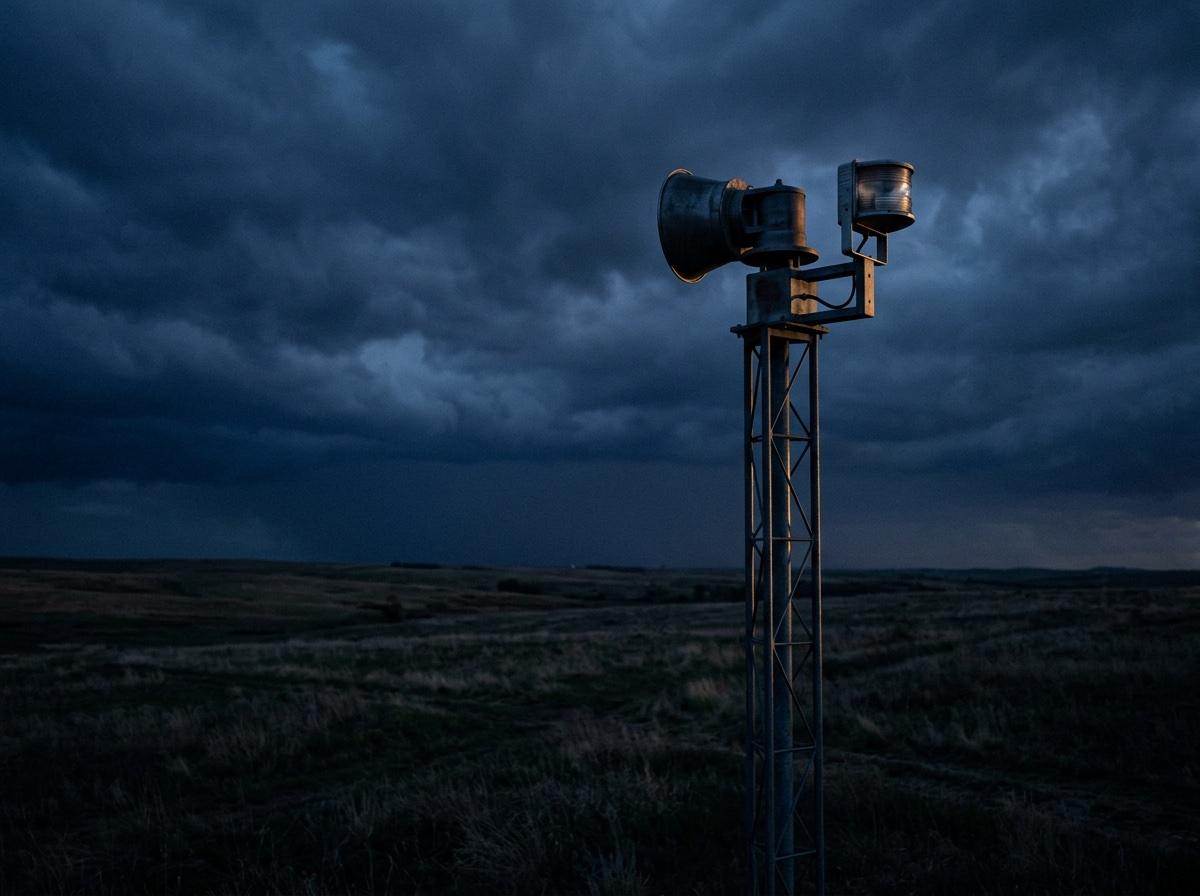
Flash needs no hardware. Alerts go out through the web app, the mobile app, SMS and email, and through relays to horns and strobes you already own. If you want a siren that sounds on the forecast rather than on the strike, Flash Weather Shield is solar-powered and cellular, in three sizes for courses, fields and pools. For heat, Flash gives a 6-hour WBGT outlook so you can move practice before the reading climbs. It plans around an on-site reading; it does not replace one.
Perry Weather vs Flash, side by side
| Attribute | Perry Weather | Flash |
|---|---|---|
| What triggers a lightning alert | A strike detected by the NLDN inside your configured radius | A forecast for your 1×1 km cell, up to 60 minutes before the first strike |
| Stated speed or lead time | Alerts in under 20 seconds of detection, per its site | Up to 60 minutes of lead time, refreshed every 2 minutes |
| All-clear | Countdown timer resets with each strike, then an all-clear alert | All-clear timer after the last strike, with detected strikes on the same map |
| Heat | On-site WBGT and heat index sensors on its weather station | 6-hour WBGT outlook; keep an on-site device where policy names one |
| Hardware | Sirens, strobes, weather station, relay controller, sold as packages | None required; relays for existing horns, or Flash Weather Shield |
| Users | Up to 50, 250 or 500 by tier | Unlimited users per site |
| Pricing | Core, Plus and Advanced tiers, quoted; no prices published | Per site, annual, quoted after a demo; free app tier for individuals |
Perry Weather
- What triggers a lightning alert
- A strike detected by the NLDN inside your configured radius
- Stated speed or lead time
- Alerts in under 20 seconds of detection, per its site
- All-clear
- Countdown timer resets with each strike, then an all-clear alert
- Heat
- On-site WBGT and heat index sensors on its weather station
- Hardware
- Sirens, strobes, weather station, relay controller, sold as packages
- Users
- Up to 50, 250 or 500 by tier
- Pricing
- Core, Plus and Advanced tiers, quoted; no prices published
Flash
- What triggers a lightning alert
- A forecast for your 1×1 km cell, up to 60 minutes before the first strike
- Stated speed or lead time
- Up to 60 minutes of lead time, refreshed every 2 minutes
- All-clear
- All-clear timer after the last strike, with detected strikes on the same map
- Heat
- 6-hour WBGT outlook; keep an on-site device where policy names one
- Hardware
- None required; relays for existing horns, or Flash Weather Shield
- Users
- Unlimited users per site
- Pricing
- Per site, annual, quoted after a demo; free app tier for individuals
When Perry Weather is the better fit
- Your written policy requires an on-site WBGT reading and you want that sensor, the siren and the software from one vendor.
- Your policy is built purely on a detected-strike radius and you mainly need it automated, logged and broadcast across the site.
- You want a single hardware lease that covers sirens, strobes and a weather station at each location.
When Flash is the better fit
- Storms build over your site rather than arriving from a distance, so the first strike nearby is often the first warning a detection radius can give.
- You run many sites, such as a district, a park system or a golf portfolio, and want each one on its own 1×1 km cell without installing anything.
- You want the decision to come with a time attached, so you can move warm-ups, hold buses or clear the back nine before a strike rather than after it.
Flash is a Preferred Vendor Partner across all 700+ Troon golf properties, the official weather safety provider of the Big 12 Conference, and the Official Weather Monitoring & Alert System of the NAIA through October 2028.
Running both
This does not have to be either-or. A detection system confirms the strike and anchors the return-to-play clock; Flash gives you the hour before it. If your district already has Perry Weather sirens and a WBGT station, Flash can sit alongside them as the early call. The everyone else vs Flash comparison covers how prediction and detection fit together in one safety plan.
Frequently asked
Perry Weather’s lightning alerts are triggered by strikes the NLDN detects inside your radius, as its site describes on 15 Oct 2026. Its software also offers future radar up to 48 hours ahead for planning. Flash forecasts the likelihood of a strike per 1×1 km cell for the next 60 minutes.
Perry Weather alerts from NLDN detections. Flash scores its forecasts against NLDN strikes and shows detected strikes on its map, so both refer to the same record of what actually struck.
Neither publishes a price. Perry Weather quotes its Core, Plus and Advanced tiers and its hardware packages. Flash quotes per site, annually, after a demo, and the Flash mobile app has a free tier for individuals.
Yes. Keep the detection alerts and the on-site WBGT reading your policy relies on, and add Flash for the hour before the first strike. Flash alerts reach staff by app, SMS and email.